DrTutor |
Site blog

The Project Management Professional (PMP®) certification has evolved significantly. PMI no longer designs the PMP exam around memorising the PMBOK® Guide. Instead, the exam is now structured around an Exam Content Outline (ECO) that reflects how project managers actually work in modern organisations.
Understanding the ECO is essential for anyone preparing for the PMP exam in 2026 and beyond.
What Is the PMP Exam Content Outline (ECO)?
The Exam Content Outline (ECO) is PMI’s official blueprint for the PMP exam. It defines:
-
What knowledge and skills are tested
-
How exam questions are distributed
-
The behaviours PMI expects from competent project managers
All PMP exam questions are written directly from the ECO. Study materials, training courses, and mock exams should therefore be aligned to it.
PMP® 2026 Exam Domains and Weighting
The PMP exam is structured around three performance-based domains, each with a specific weighting.
People – 33%
The People domain focuses on leadership and interpersonal skills. It reflects the reality that project managers spend a significant portion of their time working with people rather than managing documents.
Key areas include:
-
Leading and motivating teams
-
Managing conflict and collaboration
-
Stakeholder engagement and communication
-
Emotional intelligence and leadership behaviours
PMP questions in this domain are typically situational, asking what the project manager should do first or next in a real-world scenario.
Process – 41%
The Process domain covers how work is planned, executed, monitored, and adapted. This is the largest domain on the exam.
It includes:
-
Planning and managing scope, schedule, cost, quality, and risk
-
Selecting the appropriate delivery approach (predictive, agile, or hybrid)
-
Monitoring performance and managing change
-
Delivering value incrementally
Questions in this domain test decision-making, not rote memorisation, and often compare agile, hybrid, and predictive options.
Business Environment – 26%
The Business Environment domain represents PMI’s increased emphasis on strategic awareness and organisational impact.
It covers:
-
Strategic alignment of projects with organisational goals
-
Governance, compliance, and regulatory considerations
-
Benefits realisation and value delivery
-
Understanding the external and enterprise environment
This domain ensures PMP holders can operate effectively at a business and strategic level, not just at the project delivery level.
Why the ECO Matters More Than the PMBOK® Guide
While PMI publications such as the PMBOK® Guide remain important references, the PMP exam is not based on book chapters. It is based on the ECO.
This means:
-
Studying only the PMBOK® Guide is not sufficient
-
Training and mock exams must be mapped to ECO domains
-
Exam success depends on applying PMI’s mindset to scenarios
Key Takeaway for PMP Candidates
The PMP 2026 exam tests how you think and decide as a project manager, not how well you memorise terminology.
To prepare effectively:
-
Focus on People, Process, and Business Environment domains
-
Practice scenario-based questions
-
Study agile, hybrid, and predictive approaches together
Understanding the Exam Content Outline is the foundation of a successful PMP preparation strategy.

Competence and performance are two distinct yet interconnected concepts that are frequently used interchangeably but have distinct meanings. Understanding the difference between these terms is essential in various domains. Let's delve into the contrast between competence and performance.
**Competence: The Foundation of Potential**
- **Definition:** Competence refers to an individual's underlying knowledge, skills, and abilities in a particular area. It signifies the potential or capability to perform well.
- **Focus:** Competence emphasizes the potential or capability to perform.
- **Evaluation:** It is assessed through tests, interviews, or observations to determine if the individual possesses the necessary skills.
- **Development:** Competence can be developed through training, education, and practice.
- **Longevity:** It is generally considered stable over time.
- **Importance:** Competence provides the foundation for performance and the potential for success.
**Performance: The Actual Execution**
- **Definition:** Performance refers to the actual execution or demonstration of competencies in real-world situations. It is the observable behavior or actions that reflect an individual's competence.
- **Focus:** Performance emphasizes the actual demonstration of skills or abilities.
- **Evaluation:** It is assessed through actual job performance, productivity, and results achieved.
- **Development:** Performance can be improved through feedback, coaching, and experience.
- **Longevity:** It can vary over time due to factors such as motivation, health, or external circumstances.
- **Importance:** Performance translates competence into actual results and achievements.
**Attributes of Competence**
Competence serves as the bedrock for performance and encompasses several key attributes:
- **Knowledge:** Competence is rooted in knowledge, including understanding theories, principles, and concepts relevant to a particular field.
- **Skills:** It encompasses practical skills developed through practice and experience, both technical and soft skills.
- **Understanding:** Competence goes beyond knowledge, involving a deep understanding of the subject matter, enabling individuals to apply their knowledge and skills effectively.
- **Adaptability:** Competence evolves over time, and individuals with high competence are adaptable and open to learning.
- **Transferability:** Competence is often transferable across different domains, allowing individuals to excel in diverse contexts.
**Attributes of Performance**
Performance is the manifestation of competence in real-world scenarios and includes the following attributes:
- **Execution:** Performance is about taking action and delivering results, effectively translating competence into tangible outcomes.
- **Consistency:** It is not a one-time event; high-quality performance involves consistency over time, requiring discipline and focus.
- **Efficiency:** Efficient performance optimizes resources and manages time effectively to achieve desired outcomes with minimal waste.
- **Adaptability:** High performers can adapt their approach to specific contexts and changing requirements.
- **Feedback Utilization:** Successful performance is closely tied to feedback; individuals actively seek and use feedback to improve future performance..
**Importance in Different Domains**
Competence and performance are critical in various domains:
- **Education:** Both competence and performance are essential for students. Competence provides the foundation for learning, while performance demonstrates the application of knowledge and skills in exams and real-world situations.
- **Sports:** Competence includes technical skills, physical abilities, and tactical knowledge, while performance matters on the field. Athletes must demonstrate their competence during competitions.
- **Professional Settings:** Competence is the foundation for career growth, but performance sets individuals apart by consistently delivering high-quality work.
Conclusion
Competence and performance are interlinked but distinct aspects of human abilities. Recognizing and developing both competence and performance is vital for achieving excellence in various domains. A balance between the two is key to unlocking one's full potential and succeeding in their chosen field...

Communicate to your sales team that you are committed to growing together, regardless of the future of sales. In recent years, the sales industry has undergone significant changes, leaving some sales reps feeling uncertain.
Customers now expect salespeople to act as trusted advisors, which requires a deep understanding of the product and the customer's business challenges. Failure to do so can deter potential buyers.
In addition, the pandemic has accelerated the adoption of virtual sales, which has left some reps feeling unprepared. To support your sales team in this changing landscape, offer them the resources they need to be successful. This may include customer experience support, virtual selling training, or simply reassuring them that you are invested in their success. Be supportive of their personal and professional goals as well.
Take the time to understand their ambitions and offer mentorship, coaching, or pathways to help them achieve their dreams. Investing in training and development is a powerful way to help your sales team succeed. Sales professionals who receive regular training are more engaged at work and experience higher salesperson engagement.
Training helps reps become better sellers, provide exceptional customer service, and ultimately, achieve success in their roles. Unlike fleeting gifts like chocolate and roses, learning is a gift that keeps on giving.

Adult learning is the process of continuing learning that takes place after an individual has completed their formal education. It is a form of self-directed learning that allows adults to acquire new knowledge and skills that are relevant to their personal or professional lives.
Adult learners have a unique set of characteristics and needs, which are often different from those of younger learners. Despite these challenges, adult learning has many benefits. It allows individuals to stay competitive in their careers, improve their earning potential, and even change careers entirely. It can also help to increase confidence, boost self-esteem, and provide a sense of personal achievement. Furthermore, learning new skills and knowledge can be fun and rewarding, and it can open up new opportunities for personal growth and development.
What is Adult Learning?
Adult learning, also known as adult education, is a process of acquiring knowledge, skills, and competencies beyond traditional schooling or formal education. It is aimed at individuals who are no longer in the traditional education system, such as adults who have completed high school or those who have been out of school for several years. Adult learners often have different motivations for learning, such as career advancement, personal development, or a desire to learn something new.
Benefits of Adult Learning
Adult learning offers several benefits that can enhance one's personal and professional life. Here are a few of the key benefits
Career Advancement: Adult education can provide the knowledge and skills necessary to advance in one's career. Whether it's obtaining a certification or a degree, adult learning can provide the credentials needed to qualify for higher-paying jobs.
Personal Development: Learning can provide a sense of personal fulfillment and can enhance one's personal life. For example, learning a new language or acquiring a new skill can increase one's self-confidence and open up new opportunities.
Improved Health: Studies have shown that continued learning can lead to improved mental and physical health, including a reduced risk of depression, dementia, and other health issues.
Types of Adult Education Programs
There are various types of adult education programs available, each with its own unique features and benefits. Here are a few of the most common types of adult education programs:
Degree Programs: These programs are offered by colleges and universities and result in a degree, such as an Associate's, Bachelor's, or Master's degree. These programs typically require a significant time commitment, but they offer the highest level of credentials and are often necessary for certain career paths.
-
Certificate Programs: These programs are shorter than degree programs and offer a specialized set of skills or knowledge. They are often offered by vocational schools, community colleges, and other organizations.
-
Continuing Education: These programs are designed to help individuals stay up-to-date with the latest developments in their field. They may be required for professional licensure or certification.
-
Personal Enrichment: These programs are focused on personal development and often include classes on subjects such as art, music, or cooking.
Challenges Faced by Adult Learners
While adult learning offers many benefits, it also presents unique challenges. Here are a few of the most common challenges faced by adult learners:
Time Management: Balancing work, family, and education can be difficult for adult learners. Time management skills are essential for success in adult education.
-
Financial Constraints: Paying for education can be a challenge for adult learners. However, there are many financial aid and scholarship opportunities available to help offset the cost.
-
Technology: Many adult education programs require the use of technology, which can be a challenge for those who are not comfortable with computers or digital devices.
-
Lack of Support: Adult learners may feel isolated or lack the support they need to succeed. However, there are many resources available, such as online support groups, mentorship programs, and career counseling services.
FAQs
Q: What is the difference between adult learning and traditional schooling?
A: Traditional schooling is aimed at individuals who are still in the formal education system, such as children and young adults. Adult learning, on the other hand, is aimed at individuals who have completed their formal education or have been out of school for several years. Adult learning often focuses on specific skills or knowledge that is relevant to one's career or personal life.
Q: What are some examples of personal enrichment courses?
A: Personal enrichment courses can include a wide range of subjects, such as art, music, cooking, writing, and more. These courses are designed to provide individuals with a sense of personal fulfillment and can enhance their personal life.
Q: Can I earn a degree through online learning?
A: Yes, many colleges and universities now offer online degree programs that allow students to complete coursework from anywhere with an internet connection. Online learning can be a great option for individuals who need flexibility in their schedule or who live far from a traditional college or university.
Q: How can I find financial aid for adult education?
A: There are many financial aid options available for adult learners, including scholarships, grants, and loans. It's important to research these options and fill out the Free Application for Federal Student Aid (FAFSA) to determine eligibility for federal financial aid.
Q: What should I look for when choosing an adult education program?
A: When choosing an adult education program, it's important to consider factors such as the cost, time commitment, and the reputation of the institution. It's also important to ensure that the program aligns with your educational and career goals.
Conclusion
Adult learning provides an opportunity for individuals to acquire new skills, knowledge, and competencies that can enhance their personal and professional lives. Whether you're looking to earn a degree, obtain a certification, or simply learn something new, there are a variety of adult education programs available to help you achieve your goals. While adult learning can present unique challenges, such as time management and financial constraints, there are many resources available to help you succeed. With the right mindset and the right resources, adult learning can be a fulfilling and rewarding experience.

In today's rapidly changing business environment, it's essential to have the skills necessary to solve complex problems. Strategic thinking is an invaluable tool in this regard, enabling individuals to analyze complex issues, develop creative solutions, and implement plans that achieve long-term success. This article will explore the key elements of strategic thinking, how they can be applied to solve complex business problems, and why this approach is so important in today's competitive marketplace.
What is Strategic Thinking?
Strategic thinking is a thought process that involves analyzing a situation, considering the long-term implications of different courses of action, and making informed decisions that will achieve desired outcomes. It involves considering both internal and external factors, such as market trends, consumer behavior, and competition, in order to make well-informed decisions. Strategic thinking is an iterative process that involves continuous monitoring and evaluation of a situation, so that adjustments can be made as needed.
Why is Strategic Thinking Important for Solving Business Problems?
Strategic thinking is an essential tool for solving complex business problems because it allows individuals to analyze a situation from multiple angles and consider the long-term implications of their decisions. This approach enables individuals to identify new opportunities and potential risks, and to make informed decisions that will drive long-term success. In today's rapidly changing business environment, strategic thinking is also critical for anticipating and responding to changes in the marketplace, as well as for developing innovative solutions to complex problems.
Elements of Strategic Thinking
There are several key elements of strategic thinking that are critical to its success. These include:
Problem-solving mindset:Data-driven analysis: Strategic thinking requires a thorough analysis of data and information related to the problem being solved. This involves gathering and analyzing data from multiple sources, such as market research, consumer feedback, and competitor analysis.
Long-term perspective:
Flexibility: Strategic thinking requires a level of flexibility and adaptability. This involves the ability to respond to changes in the marketplace and to adjust strategies as needed.
Collaboration:
Applying Strategic Thinking to Solve Business Problems
So, how can strategic thinking be applied to solve complex business problems? The following steps can be helpful:
Define the problem:Gather data:
Analyze data:
Strategic Thinking in the Evolving Business Landscape
In the ever-changing business landscape, having the ability to think strategically has become increasingly important for success. Strategic thinking involves looking at the big picture, considering multiple perspectives, and making decisions that will drive your business forward. This type of thinking is critical in solving complex business problems and navigating the challenges that come with running a successful organization.
The first step in strategic thinking is to understand the problem. It is important to take the time to fully understand the problem before attempting to solve it. This includes researching the problem, gathering information from multiple sources, and considering all relevant factors. In many cases, problems are complex and require a deep understanding of the root causes in order to be effectively addressed.
Once you have a good understanding of the problem, the next step is to consider multiple perspectives. This includes looking at the problem from different angles, including the perspective of customers, employees, stakeholders, and other key players. It is important to take into account the potential consequences of each option, including the impact on the business, the community, and the environment. This requires an open mind and a willingness to think beyond the traditional ways of doing things.
The next step in strategic thinking is to analyze the information and develop a solution. This involves evaluating the potential consequences of each option and determining the best course of action. It is important to take into account the best interests of the company and its stakeholders, and to consider the long-term impact of each decision. The solution should be based on a thorough analysis of the information and a clear understanding of the problem.
Finally, once a solution has been developed, it is important to put it into action. This involves communicating the solution to the relevant parties, implementing the necessary changes, and monitoring the results. It is important to be flexible and open to making adjustments if needed, and to continuously evaluate the solution to ensure that it is meeting the desired outcomes.
In conclusion
Strategic thinking is an essential skill for solving complex business problems and navigating the challenges of running a successful organization. It involves understanding the problem, considering multiple perspectives, analyzing the information, and putting the solution into action. By developing and honing this skill, business leaders can make informed decisions that will drive their companies forward and position them for success in today’s competitive business environment.
In order to become a strategic thinker, it is important to continuously develop your skills and knowledge. This can be done through ongoing education and training, as well as by seeking out opportunities to apply your skills in real-world situations. By doing so, you can become a more effective leader and drive your business forward, even in the face of complex challenges.

Decision Making Process
Examples:
An individual is faced with a decision about which school to attend. To make an informed decision, the individual will gather information about each school, including its academic programs, campus culture, and location. The individual will then evaluate the pros and cons of each option, considering their personal goals and priorities, and make a decision based on their analysis.Solutions:
- Learn to ask questions and gather information from multiple sources.
- Evaluate information objectively, considering multiple perspectives and addressing biases and assumptions.
- Make informed decisions based on your analysis, taking into account all relevant information and factors.
Creative Thinking
Creative thinking is the ability to generate and apply new ideas, approaches, and solutions to complex problems. This skill involves exploring new perspectives, considering unconventional solutions, and taking calculated risks. To develop creative thinking skills, individuals must learn to challenge assumptions, embrace change, and continuously seek out new opportunities and solutions.
Examples:
- A business leader is faced with a challenge in the market. To find a creative solution, the leader will explore new perspectives, consider unconventional solutions, and take calculated risks. The leader will then implement a new approach that sets their company apart from the competition and meets changing customer needs.
- An individual is faced with a challenge in their personal life, such as finding a new job. To find a creative solution, the individual will explore new perspectives, consider unconventional solutions, and take calculated risks. The individual will then implement a new approach that sets them apart from others and aligns with their personal goals and aspirations.
Solutions:
- Challenge assumptions and embrace change.
- Continuously seek out new opportunities and solutions.
- Take calculated risks, and be willing to try new approaches and solutions.
Systematic Thinking
Systematic thinking is the ability to plan, organize, and implement complex projects and processes effectively. This skill involves breaking down complex tasks into smaller, manageable steps, creating schedules and timelines, and monitoring progress to ensure completion. To develop systematic thinking skills, individuals must learn to create and implement effective plans, prioritize tasks, and monitor progress to ensure completion.
Examples:
- A business leader is tasked with launching a new product. To ensure success, the leader will create a systematic plan, breaking down the complex task into smaller, manageable steps. The leader will create a timeline, prioritize tasks, and monitor progress to ensure the product is launched on time and to a high standard.
- An individual is tasked with organizing a family vacation. To ensure success, the individual will create a systematic plan, breaking down the complex task into smaller, manageable steps. The individual will create a timeline, prioritize tasks, and monitor progress to ensure the vacation is organized and executed effectively.
Solutions:
- Create effective plans and break down complex tasks into smaller, manageable steps.
- Prioritize tasks and create schedules and timelines.
- Monitor progress and ensure completion of projects and processes.
Strategic Thinking
Strategic thinking is the ability to analyze and adapt to changes in the environment, identify and evaluate new opportunities, and continuously adjust strategies as needed. This skill enables individuals to remain flexible, agile, and responsive, and to be able to quickly adjust their strategies as needed. To develop strategic thinking skills, individuals must learn to continuously monitor and analyze changes in their environment, identify and evaluate new opportunities, and adapt their strategies accordingly.
Examples:
- A business leader is analyzing and adapting to changes in the market. To do this, the leader will continuously monitor market trends and conditions, identify new opportunities, and adjust their strategies as needed. The leader will also seek out feedback and input from stakeholders, including employees, customers, and partners, to ensure their strategies are aligned with their organization's goals and objectives.
- An individual is faced with changes in their personal life, such as a new job or a move to a new city. To adapt to these changes, the individual will continuously monitor and analyze the new environment, identify new opportunities, and adjust their strategies accordingly. The individual will seek out feedback and input from friends, family, and mentors to ensure their strategies align with their personal goals and aspirations.
Solutions:
- Continuously monitor and analyze changes in your environment.
- Identify and evaluate new opportunities and adjust your strategies as needed.
- Seek out feedback and input from stakeholders, including family, friends, mentors, and others.
In conclusion
Developing thinking skills is essential for success in both personal and professional life. From critical thinking to strategic thinking, these skills can help us make informed decisions, solve complex problems, and continuously improve and adapt to changing circumstances. By continuously practicing and developing these skills, we can become more effective, efficient, and successful in all areas of our lives.

The financial sector is constantly evolving and adapting to new regulations and threats. As a result, financial institutions must stay ahead of the curve in terms of their training and education programs to ensure their employees are equipped to detect and prevent financial crimes. One way to do this is by converting traditional, lengthy training programs into shorter, more easily digestible digital modules.
In this article, we'll examine the key considerations for converting a 3-day financial crime course into a 45-minute SCORM-digital module and provide best practices for creating an effective and engaging learning experience.
Understanding Your Audience
The first step in creating an effective digital module is to understand your target audience.
Who will be taking the course? What is their level of expertise? What are their learning preferences?
By understanding your audience, you can tailor the content and delivery of the course to meet their needs and ensure they retain the information they need to do their jobs effectively.
Identifying the Most Critical Information
With a 3-day course, it can be tempting to include as much information as possible. However, when converting the course to a 45-minute SCORM-digital module, it's important to focus on the most critical information.
To determine what information is most critical, ask yourself:
What are the most common financial crimes your employees need to detect and prevent? What information do they need to know to do their jobs effectively?
Once you've identified the most critical information, you can focus on delivering that information in a clear and concise manner.
Using Interactive and Engaging Content
One of the biggest challenges of converting a 3-day course into a 45-min SCORM digital module is maintaining engagement. To overcome this challenge, it's important to use interactive and engaging content.
Consider using infographics, videos, and other multimedia elements to break up the text and keep the learner engaged. Interactive activities, such as quizzes and games, can also be used to reinforce the key concepts and ensure learners retain the information.
Providing Bite-Sized Pieces of Information
When delivering information in a digital module-SCORM, it's important to break it down into bite-sized pieces. This makes the information easier to digest and helps learners retain the information.
Consider using subheadings, bullet points, and other formatting techniques to break up the text and make the information more accessible.
Evaluating the Success of Your Digital Module
Once you've created your digital module, it's important to evaluate its success. Were learners able to retain the information? Did they find the module engaging and effective?
Consider using surveys, quizzes, and other evaluations methods to gauge the success of your digital module and make any necessary improvements.
Conclusion
Converting x-day financial crime course into a SCORM digital module can be a challenge, but by understanding your audience, focusing on the most critical information, using interactive and engaging content, and providing bite-sized pieces of information, you can create a successful and effective learning experience.

In this article, we'll examine the key considerations for developing a global leadership organization's learning strategy and content.
Understanding the Business Goals
The first step in creating an effective learning strategy is to understand the business goals. What is the organization trying to achieve through its leadership development program? Is the focus on improving leadership skills, promoting diversity and inclusion, or preparing leaders for new roles?
By understanding the business goals, you can ensure that the learning strategy and content align with the organization's priorities and meet its needs.
Identifying the Target Audience
The next step is to identify the target audience for the leadership development program. Who are the employees the organization is trying to reach? What is their level of expertise? What are their learning preferences?
By understanding the target audience, you can tailor the learning strategy and content to meet their needs and ensure they receive the information they need to be effective leaders.
Creating a Cohesive Learning Experience
With employees located all over the world, it's important to create a cohesive learning experience. To achieve this, consider using a blended learning approach that combines in-person training with online learning modules.
By using a blended approach, you can provide employees with a consistent and cohesive learning experience, no matter where they are located.
Providing Opportunities for Collaboration and Networking
Leadership development is not just about acquiring new skills, it's also about building relationships with other leaders. To foster collaboration and networking opportunities, consider incorporating team-building activities and networking events into the learning program.
These activities can help employees build relationships with their peers and gain new insights from other leaders in the organization.
Evaluating the Success of the Learning Strategy
Once the learning strategy and content have been developed, it's important to evaluate its success. Were employees able to acquire the skills and knowledge they need to be effective leaders? Did they find the learning experience engaging and effective?
Consider using surveys, quizzes, and other evaluations methods to gauge the success of the learning strategy and make any necessary improvements.
Conclusion
Developing a global leadership organization's learning strategy and content requires careful consideration of the business goals, target audience, and the need for a cohesive learning experience. By providing opportunities for collaboration and networking, and evaluating the success of the learning strategy, organizations can ensure their leadership development program is effective and meets the needs of their employees.

As organizations strive to develop their employees and grow their business, understanding learning needs is a crucial aspect of their success. With the right approach, companies can provide their employees with the resources and training they need to succeed and advance in their careers. This guide aims to provide a comprehensive understanding of learning needs and how organizations can address them effectively.
What are Learning Needs?
Learning needs refer to the areas where an individual or organization requires development and growth. In the context of employees, learning needs can be related to their current job responsibilities, future career goals, or personal development. These needs can range from technical skills to soft skills, such as communication, leadership, and teamwork.
Identifying Learning Needs
To effectively address learning needs, organizations must first identify them. This can be done through various methods, including performance evaluations, skill assessments, and employee feedback. The results of these assessments can provide a clear picture of the areas where employees need development, allowing organizations to tailor their learning and development initiatives to meet their needs.
Benefits of Addressing Learning Needs
Addressing learning needs has numerous benefits for both employees and organizations. For employees, it can lead to increased job satisfaction, higher productivity, and career advancement opportunities. For organizations, a focus on learning and development can improve employee morale, reduce turnover, and increase competitiveness in the market.
Addressing Learning Needs: Best Practices
Create a culture of learning: Organizations should encourage and support a culture of learning by providing employees with opportunities to learn and grow. This can be done through various initiatives, such as training programs, workshops, and mentorship opportunities.
-
Offer flexible learning options: To meet the diverse learning needs of employees, organizations should offer flexible learning options that cater to different learning styles and schedules. This can include online courses, on-the-job training, and experiential learning opportunities.
Encourage employee feedback: Organizations should regularly solicit feedback from employees to understand their learning needs and preferences. This can be done through surveys, focus groups, and one-on-one discussions with managers.
-
Align learning with business goals: Organizations should align their learning and development initiatives with their business goals to ensure that their employees are acquiring the skills and knowledge necessary to support the organization's success.
-
Measure success: Organizations should track the effectiveness of their learning and development initiatives to identify areas for improvement and ensure that they are meeting the learning needs of their employees.
Types of Learning Needs
Learning needs can be divided into several categories based on their nature and purpose. These categories include:
Technical Skills: Technical skills refer to the specific abilities and knowledge required to perform a particular job or task. These skills can include software proficiency, programming languages, and industry-specific knowledge.
-
Soft Skills: Soft skills refer to personal attributes and interpersonal abilities that are important for success in the workplace. These skills include communication, teamwork, problem-solving, and leadership.
-
Professional Development: Professional development refers to learning and growth opportunities that help employees advance in their careers. This can include leadership training, project management, and strategic planning.
-
Compliance Training: Compliance training refers to the learning and development required to meet regulatory requirements and standards in specific industries. This can include safety training, data privacy, and ethics training.
-
Personal Development: Personal development refers to learning and growth opportunities that help employees improve their personal lives and well-being. This can include stress management, financial planning, and personal growth workshops.
Addressing Learning Needs in the Workplace
Organizations can effectively address learning needs in the workplace through a variety of approaches, including:
Formal Training Programs: Formal training programs are structured learning experiences designed to meet specific learning needs. These programs can be delivered in-person or online and can cover a range of topics, including technical skills, soft skills, and professional development.
-
On-the-Job Training: On-the-job training involves employees learning through practical experience and observation. This approach can be effective for developing technical skills and allowing employees to apply their new knowledge and skills immediately in their work.
-
Mentorship Programs: Mentorship programs pair employees with experienced professionals who can provide guidance and support in their development. These programs can be effective for developing both technical and soft skills, as well as providing career advancement opportunities.
-
Self-Directed Learning: Self-directed learning refers to employees taking charge of their own learning and development. This can involve employees seeking out learning opportunities on their own, such as attending conferences, workshops, or online courses.
-
Employee Resource Groups: Employee resource groups are groups of employees who share similar interests or backgrounds and come together to support each other in their personal and professional development. These groups can provide a supportive environment for learning and development, as well as opportunities for networking and community building.
The Importance of Continual Learning
Continual learning is a critical aspect of employee development and organizational success. By continuously investing in their employees' learning and development, organizations can stay competitive in a rapidly changing market, retain top talent, and ensure the success of their business.
As the business world continues to evolve and new technologies emerge, it is essential for organizations to stay ahead of the curve and equip their employees with the knowledge and skills they need to succeed. By understanding and addressing learning needs, organizations can ensure that their employees are prepared to meet the challenges of the future and drive the success of their business.
Final Thoughts
In conclusion, understanding and addressing learning needs is a crucial aspect of employee development and organizational success. By creating a culture of learning, offering flexible learning options, and aligning learning initiatives with business goals, organizations can effectively meet the needs of their employees and drive the success of their business. With the right approach, organizations can ensure that their employees are equipped with the knowledge and skills they need to succeed, both today and in the future.

In today's fast-paced business environment, companies in the UK must continuously adapt and improve in order to stay ahead of the competition. This is where the learning and development (L&D) cycle comes in. It is a systematic process that enables organizations to identify and address the skills, knowledge, and abilities that their employees need in order to meet their current and future business objectives.
Understanding the Learning and Development Cycle
The L&D cycle is a continuous loop that starts with identifying the needs of the organization and its employees,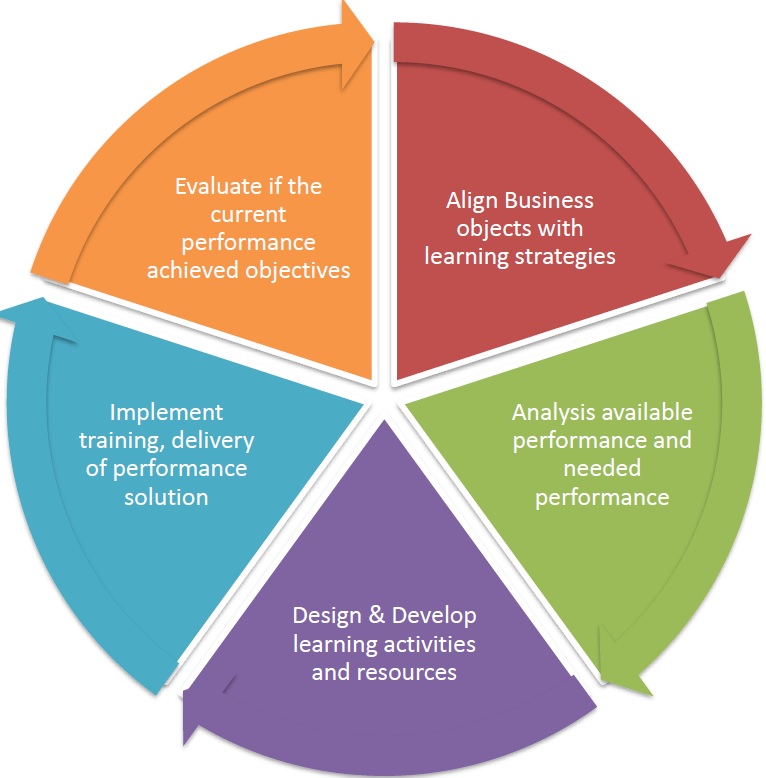 followed by planning and delivering appropriate training and development activities, evaluating the results, and finally, using the insights gained to improve the process.
The Importance of the Learning and Development Cycle
The L&D cycle provides numerous benefits to organizations and their employees, including:
- Improving the overall performance and productivity of the organization
- Enhancing employee skills and knowledge, leading to career advancement and personal growth
- Promoting a positive company culture and increased employee engagement and satisfaction
- Fostering a continuous improvement mindset and a commitment to lifelong learning
- Aligning employee development with the organization's overall goals and objectives
The Stages of the Learning and Development Cycle
- Identify: In this stage, organizations assess the current and future needs of the business, as well as the skills, knowledge, and abilities of their employees. This information is used to determine the specific training and development requirements.
- Plan: Based on the needs analysis, a training plan is developed that outlines the goals, objectives, content, and delivery methods for the training and development activities.
- Deliver: In this stage, the training and development activities are delivered to the employees, using methods such as classroom training, e-learning, coaching, and on-the-job training.
- Evaluate: The results of the training and development activities are measured and evaluated to determine their effectiveness in meeting the goals and objectives.
- Improve: Insights from the evaluation are used to improve the training and development process, ensuring that it continues to meet the evolving needs of the organization and its employees.
Best Practices for Implementing the Learning and Development Cycle
To ensure that the L&D cycle is effective and delivers the desired outcomes, organizations should follow these best practices:
- Involve employees in the process by soliciting their feedback and ideas for training and development activities
- Ensure that the training and development activities align with the overall goals and objectives of the organization
- Use a variety of delivery methods to accommodate different learning styles and preferences
- Regularly evaluate and improve the process to ensure that it remains effective and relevant
Conclusion
The learning and development cycle is a vital component of any successful organization. By continuously identifying and addressing the skills, knowledge, and abilities that employees need, companies in the UK can stay ahead of the competition and achieve their business objectives. Through a systematic process of needs analysis, planning, delivery, evaluation, and improvement, the L&D cycle enables organizations to foster a culture of continuous improvement and a commitment to lifelong learning.
It is important for companies to adopt best practices for implementing the L&D cycle, such as involving employees in the process, aligning training and development activities with overall goals, using a variety of delivery methods, and regularly evaluating and improving the process.
In conclusion, the learning and development cycle is an essential tool for companies looking to drive their business forward and ensure the success of their employees. By investing in the skills and knowledge of their workforce, organizations can achieve long-term growth and success.